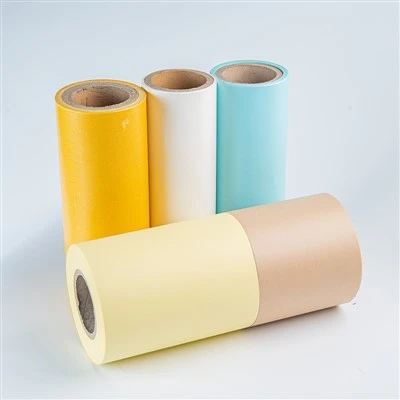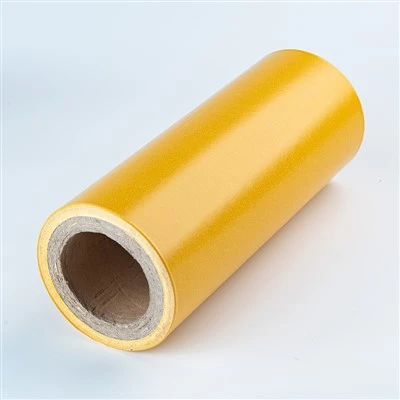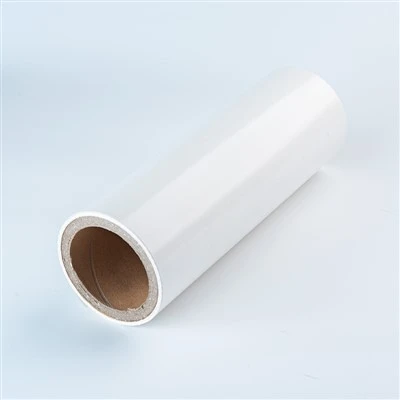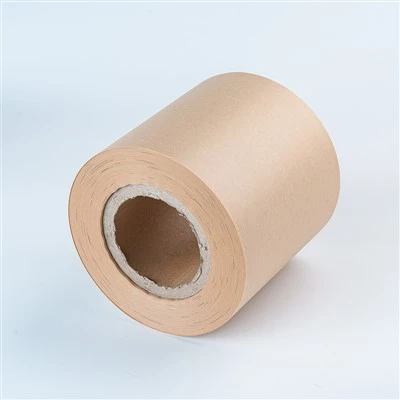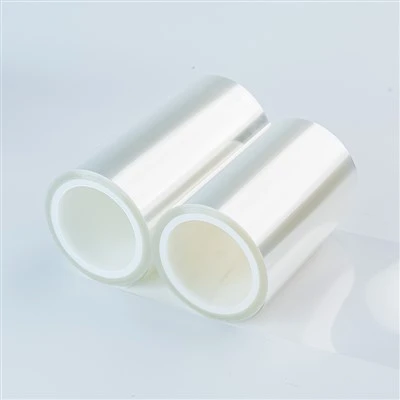

Glassine and PET are not interchangeable simply because both can carry a release coating. The correct substrate depends on the adhesive system, converting method, dimensional requirements, temperature exposure, surface cleanliness and cost target.
Article Content
Quick Answer
Choose glassine when paper stiffness, converting economy, printability and a paper-based substrate are priorities. Choose PET when a non-fibrous surface, tighter thickness control, dimensional stability, transparency or cleaner precision converting is more important. Final selection should be validated with the actual adhesive and process.
Glassine Release Paper: Where It Performs Well
Glassine is a dense, highly calendered paper with a smooth, relatively closed surface. After silicone coating, it is widely used for labels, tapes, hot-melt adhesive films, die-cut parts and other pressure-sensitive constructions. Its advantages include good stiffness, reliable web handling, broad basis-weight options and favorable converting economics.
PET Release Film: Where It Performs Well
PET film provides a smooth, non-fibrous surface and generally tighter thickness and dimensional control than paper. It is often selected for electronics, precision die-cutting, optical or clean applications, high-quality adhesive surfaces and processes where moisture-related paper movement is undesirable.
Key Selection Factors
Compare substrate stiffness, caliper or thickness tolerance, release surface quality, die-cutting behavior, winding, temperature exposure, dimensional stability, static requirements, cleanliness, transparency, adhesive chemistry and total converted cost. A technically stronger substrate is not automatically the most economical choice.
Glassine or PET for Hot-Melt Adhesive Film?
Both can work. Glassine is often attractive where cost and converting stiffness matter. PET is preferred where the adhesive surface must be especially smooth, where dimensional stability is important, or where the process needs a film-based carrier. The hot-melt chemistry and lamination temperature must be confirmed before finalizing the liner.
Validation Before Production
Test the proposed liner with the customer's actual adhesive, coating weight, lamination temperature, dwell time, winding pressure and storage conditions. Compare initial release, aged release, adhesive appearance, residue or transfer, curl and converting performance.
FAQ
Q: Is PET always better than glassine?
A: No. PET offers specific dimensional and surface advantages, but glassine can provide better economics and useful stiffness. The application determines the better choice.
Q: Can the same release force specification be used on glassine and PET?
A: Not automatically. Substrate, coating system and test conditions can change measured peel behavior. Compare samples under the same agreed method.
Q: Which liner is better for precision die-cutting?
A: PET is often preferred when tight dimensional control and a non-fibrous surface are critical, but the die, adhesive and converting setup must still be validated.
Technical Note
Release-liner performance is application-specific. Values and material choices should be confirmed using an agreed test method and, where possible, the customer's actual adhesive and converting conditions.